

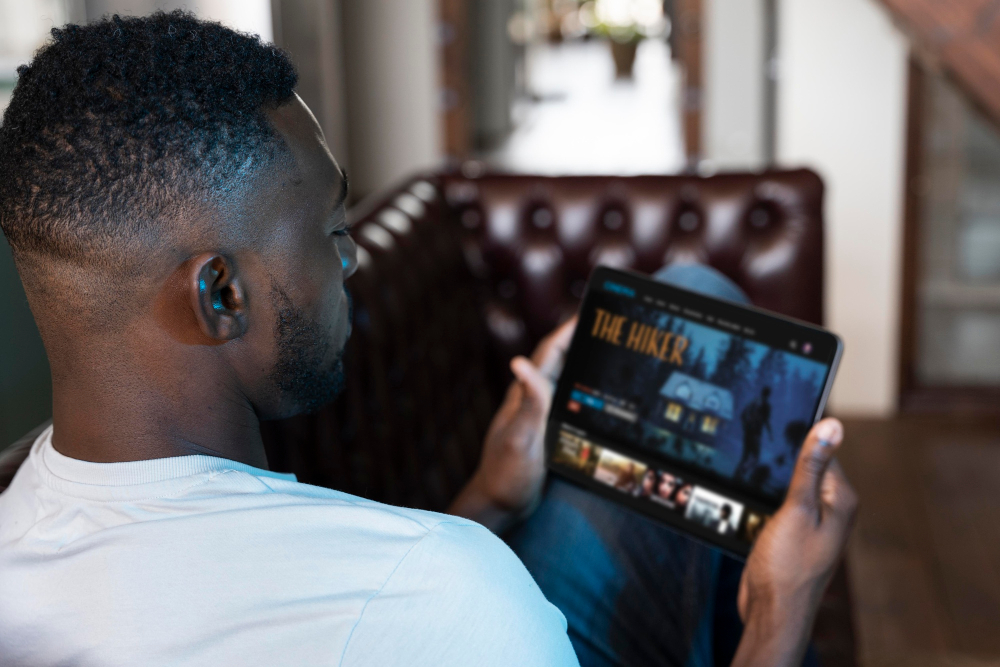
The mass viewing of the game show characterized the Golden Age of Television. Families gathered in front of cathode-ray tubes to watch ordinary people win appliances and cash prizes. This age created a relationship between the host and the home audience.
This passive viewership has been transformed in the modern digital landscape into an interactive pursuit. Fans of retro television formats browse reviews to find the live dealer casino so they can enter a real-time game show. This kind of site would offer them games like Dream Catcher or Deal or No Deal. These platforms are effective at blurring the boundaries between television viewed as broadcast content and television used in an active-gaming mode.
Streaming technology has done a good job of reviving the excitement of live competition. The format has changed to a world where the audience demands instant responsiveness.
The Psychology Behind Event Television
The game show formula works because it establishes a parasocial interaction between the player and the talent. The unpredictability of live broadcasts disappeared when producers began editing pre-recorded television content, erasing the original spontaneity. Streaming services gave viewers the adrenaline rush of watching live television.
Viewers want to believe that something could happen at any second. Nielsen reports show that game show audiences watching live, linear television are getting older (56% are over 65). The popularity of streaming services stems from their ability to attract a younger audience. The current demand for shared audience experiences demonstrates that regular television programming cannot fulfill viewer needs.
Streamers Are the New Studio Hosts
Individual content creators on sites such as Twitch and YouTube have easily taken on the role of the new-age game-show host. Personalities such as Ludwig and Ibai host huge events that rival the production quality of network television.
The critical difference is the chatroom, providing an active studio audience that can vote. They also have a real-time impact on the game. In 2025, categories like “Just Chatting” on streaming platforms regularly outperform big-name esports games. Creators make good use of their communities to create enormous, interactive shows that conventional television cannot compete with.
Technology Eliminates the Broadcast Delay
The main challenge of interactive broadcasting in the past was latency. A half-minute delay made it challenging to have a real interaction between a host and a remote audience. Today, the latest streaming protocols, such as WebRTC, can deliver in under two seconds on many platforms.
This is a technical leap that enables a host to pose a question and have all the collective answers. They’re now instantly available from thousands of remote players all at once. This sub-second connectivity is the near and far of the entire modern game show revival. It’s transforming a one-way broadcast into a truly two-way conversation.
The Studio Experience Goes Digital
There’s a subgenre of casino games that replicates the look of 1990s game shows with the functionality of today’s wagering games. These experiences feature studio sets and real-life hosts who spin oversized wheels and open acrylic briefcases. At the same time, players guess where the ball will land.
Real casino games don’t have RNGs running silently in back rooms; they have croupiers and roulette wheels. RealTime Gaming caught players’ attention with digital specialty games that mimic bingo mechanics through immersive, high-quality graphics. Evolution Gaming has grown massively since it celebrated its 100th live table game in 2013. It proves players demand real humans hosting gaming sessions.
Immersion Beyond the Screen With AR
The next frontier for the interactive game show is Augmented Reality (AR) and Virtual Reality (VR). Current productions already use AR to overlay digital graphics and multipliers onto physical sets, providing a hybrid visual experience.
With the introduction of 5G technology, 8K live streaming is becoming a viable option. It’s further blurring the line between broadcast and video games. The industry is moving towards a future where the player can virtually stand on stage. Next to the host, they’re all together without a screen.
Press Start to Enter the Studio
The world is no longer even watching history; it’s actively shaping it. The reboot of the game-show format is less about nostalgia and more about empowering viewers through technology.

The audience is playing for points with a livestream or engaging with a live host in a digital studio. It’s finally stepped out of the dark and onto the stage now. The remote control has then become a controller, and the passive viewer has become the star of the show.


 Your total news and information resource for all things Science, Technology, Engineering / Mathematics, Art, and Medicine / Health.
Leave a Comment