

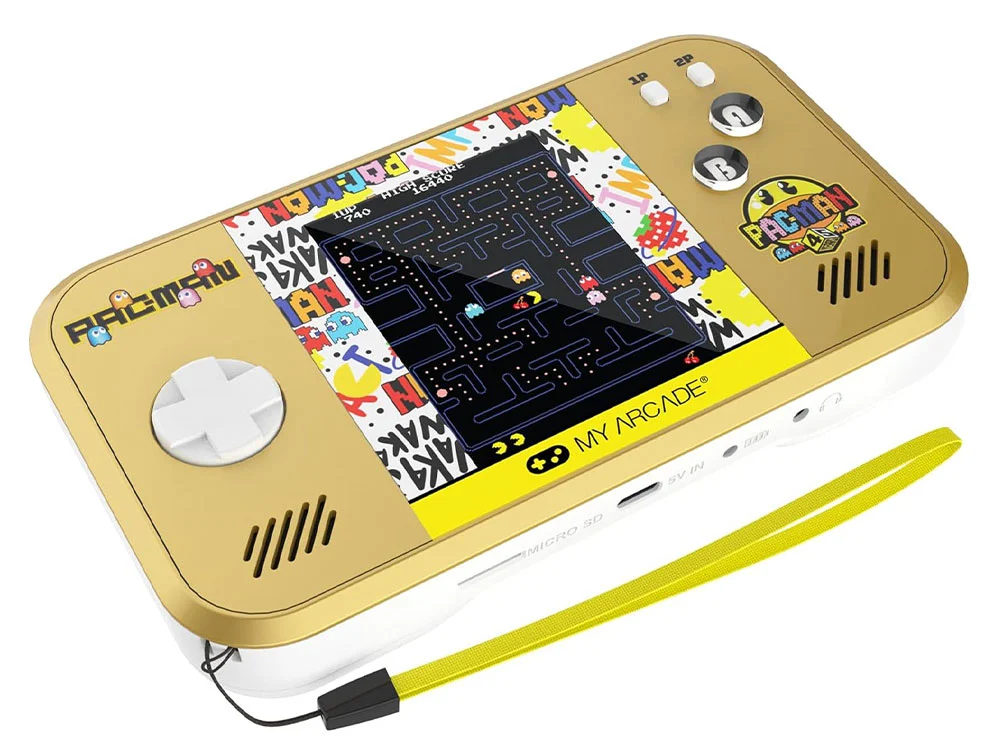
The combination of a light-up screen and electronic chirping sound effect worked. It signaled to players that they’d found the ultimate handheld gaming experience. Back in the 90s, that meant buying a poker game at the checkout. It meant diving into the local gaming retailer’s gloriously gray world. Pushing down on poker chips with the fingers had a satisfying snap of plastic buttons. It’s as if those players played themselves a hand of cards.
Speed and simplicity were the benchmarks set by those first generations of handheld gamers. Most players today usually check multiple online poker site reviews before picking a mobile game. It’s because they want that same simple interface and lightning-fast gameplay.
Modern gaming systems can’t replicate old handheld games because they were optimized for their own unique design parameters. No, what players learn from those games is how to perfect an interface. The outdated plastic display now shines with smooth glass. And playing poker requires the same fast response on the preferred mobile poker platform.
Mattel Auto Race Started the Digital Revolution
The development of mobile card games required prior validation of digital handheld gaming devices. Mattel Electronics launched Auto Race in 1976, the first all-digital handheld. Programmed with under 512 bytes of memory, that’s barely enough to download most punctuation-heavy tweets these days. Auto Race proved players could care about moving red LED blips that simulated cars.
Auto Race didn’t simulate cards, but players proved there was a market for battery-operated, pocket-sized devices solely devoted to games. Digital distractions that could go wherever their owner went.
Fixed Sprites Defined Early Strategy Limitations
Liquid Crystal Displays (LCD) technology presented its own restrictions on how games could be programmed. Manufacturers such as Tiger Electronics used “fixed sprites”: images printed on-screen at all times, made visible only when required.
Animations weren’t possible, so gameplay had to approximate movement by flashing available positions. However, this limitation proved advantageous for card games. Instead of designing an entire casino table, decisions were boiled down to simple 1s and 0s. Players were conditioned to ignore flashy distractions and base every decision purely on the math of what move to make next.
Tiger Electronics Flooded the Market With LCD Classics
The market was flooded with dedicated card gaming devices by the mid-1990s. Tiger Electronics obtained licenses for its handhelds and released a branded version in 1994, officially bringing casino visuals to the LCD scene. These games are distinct in that they’re commonly targeted at children for travel use, rather than for adult use.
The astronomical numbers produced make them available to everyone. Suddenly, playing a couple of hands of video poker or blackjack while on the way to work became commonplace. The mid-1990s showed that there was a large enough audience to support a dedicated card strategy device.
The Tiger Game.com Introduced Touchscreens to Portable Gaming

The portable strategy eventually took a bizarre turn in 1997, when Tiger Electronics released the Tiger Game.com. Despite being an outright flop that sold fewer than 300,000 units, it pioneered two features. They’re integral to current handheld design: a touchscreen and a stylus.
The Game.com tried to replicate the tactile action of physically touching cards or chips in the hand. It used buttons but eliminated the middle ground before capacitive touchscreens, and it also featured primitive internet connectivity. That’s what eerily foreshadowed the rise of always-on mobile gaming. Clunky as it was, the Game.com set a blueprint with its attempt at player connectivity and the elimination of physical buttons.
Modern Apps Replicate the Instant Action of LCD Gaming
Today’s most popular mobile strategy titles are built on the same “instant on” mentality of those cheap LCD handhelds. Sure, modern smartphones can handle console-grade graphics these days, but mobile poker players value speed and readability. Features like “Fast Fold” mechanics or single-column interfaces designed for portrait mode echo history. They’re spiritual descendants of those tiny UIs from the ’90s.
The industry learned that players on mobile expect sessions to be short and infrequent. It’s just as those people who originally purchased LCD handhelds did. The main goal should always be to eliminate friction between players and their choices.
The Pocket Casino Legacy
Think about how far gaming has come since those single-game plastic bricks released in the 90s. From 4-bit processors to chipsets more powerful than desktop computers, the only thing that hasn’t changed is human psychology.
Gamers still yearn for that satisfying pocketable victory through tactical play. Those who maintain these original LCD units are preserving more than just toys; they’re keeping the DNA of today’s mobile gaming industry. The innovation of these gaming units demonstrated that high-stakes strategy games could be played without tables. They’re played only on a screen and with some spare time.

 Your total news and information resource for all things Science, Technology, Engineering / Mathematics, Art, and Medicine / Health.
Leave a Comment