


Anyone who has spun through the menu of an Atari Flashback knows the collection holds more than just the marquee names. Tucked between Pitfall! and Adventure sit a handful of casual, chance-based diversions — slot-style mini-games and card-flipping curiosities that never demanded much strategy, just a willingness to let the reels tumble and see what came up. Those blocky spinners feel almost quaint now, but they represent something surprisingly durable in gaming culture: the simple, hypnotic pull of luck. That same pull never went away. It just kept finding new hardware, new screens, and eventually, new currencies to run on.
Fast-forward from those chunky Atari reels and the descendants of those mini-games now live in a completely different environment — one built around digital coins instead of quarters. For readers curious about how modern chance-based entertainment stacks up, resources like Visit https://legitbestcryptocasinos.com compare welcome bonuses and cashback offers at crypto-friendly sites serving US players, breaking down wagering requirements, which coins are supported, and how quickly winnings clear. Such comparisons also unpack the murkier corners of the space, including no-KYC play, licensing questions, and the legal grey area surrounding offshore crypto gambling. For anyone tracing the evolution of luck-based play from cartridge to blockchain, understanding how these bonuses and cashback structures actually work is the practical bridge between nostalgia and today’s landscape.
The Reels That Refused to Retire
Slot-style gameplay has a long, tangled history inside video games, and it predates the Atari Flashback by decades. Early arcade cabinets flirted with reels and payout logic long before home consoles made them casual entertainment. The concept was even codified in software form — the classic Slot Machine (video game)) for the Atari 2600 turned a bar-room fixture into a living-room pastime, complete with the era’s signature beeps and flickering symbols.
What made these games stick was their honesty about what they were. There was no pretending to be a deep RPG or a twitchy shooter. A player pulled a virtual lever, the symbols spun, and the outcome arrived in seconds. That loop is almost embarrassingly simple, yet it hooked players who otherwise chased high scores in Asteroids or plotted routes through Adventure. The appeal wasn’t mastery. It was anticipation.
Why Luck Feels Good
There’s real design intention behind that anticipation. Chance-based games are engineered to deliver small, unpredictable jolts of excitement, and that unpredictability is the whole point. Writers have explored how luck gets engineered into games, showing that randomness isn’t laziness — it’s a carefully tuned tool that keeps players leaning forward, uncertain whether the next spin, card, or loot drop will pay off.
Retro collectors recognize this instinct even outside dedicated luck games. The random item boxes in Mario Kart, the loot tables in Diablo, the mystery of what a Legend of Zelda dungeon chest might hold — all of them borrow from the same emotional well. The Atari Flashback mini-games just presented that feeling in its purest, most stripped-down form. No skill tree, no story, just the flip of fortune. That directness is exactly why the format aged so well while flashier genres came and went.
From Arcade Floors to Home Screens
The broader story of chance-based play is really the story of where people went to be entertained. The American arcade was once the beating heart of it all, a neon-lit room where quarters bought a few minutes of adrenaline. That golden era eventually faded, a shift chronicled in detail in the rise and fall of arcades, which traces how the cultural center of gaming migrated from public cabinets into private living rooms.
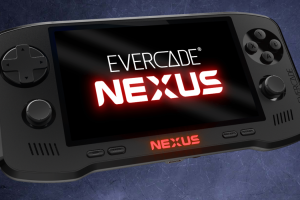
That migration mattered for luck-based games in particular. Once the action moved home — first through consoles like the Atari 2600, later through plug-and-play collections and handhelds like the Evercade — the barrier to a quick spin dropped to nearly nothing. A player no longer needed a pocket full of change or a trip downtown. The reels were a menu click away. Convenience compounded the appeal, and casual chance games quietly became a permanent fixture of the home entertainment mix.

The Jump to Digital Coins
The most recent chapter follows that same logic of convenience taken to its extreme. Where quarters once fed a cabinet and controllers once navigated a Flashback menu, digital currencies now power a new wave of chance-based entertainment. The mechanics are recognizably descended from those old slot mini-games — spinning symbols, instant outcomes, that familiar tick of anticipation — but the infrastructure underneath is entirely modern.
One notable evolution is the idea of provably fair outcomes, a concept that would have baffled anyone feeding a 2600 cartridge. Instead of trusting a black-box random number generator, players can now verify that a result wasn’t tampered with, using cryptographic proofs baked into the game itself. It’s a fascinating twist: the same genre that started as pure, unverifiable chance has grown a transparency layer that earlier generations never imagined possible. The luck stayed the same. The trust model changed completely.
Old Instincts, New Screens
What ties the whole arc together is how little the core human impulse has shifted. A collector spinning the reels on an Atari Flashback and someone watching symbols line up on a modern coin-based screen are chasing the identical sensation — that flicker of not-knowing, followed by the small rush of the reveal. The hardware evolved from wood-grain consoles to invisible blockchains, and the currency morphed from arcade tokens to digital coins, but the emotional engine never really changed.
That’s the quiet lesson buried in those Atari mini-games. They were never just filler between the classics. They were early proof that a well-tuned game of chance has staying power that outlasts graphics, genres, and even the machines themselves — a thread running unbroken from a plastic controller straight into today’s most cutting-edge digital experiences.


 Your total news and information resource for all things Science, Technology, Engineering / Mathematics, Art, and Medicine / Health.
Leave a Comment