

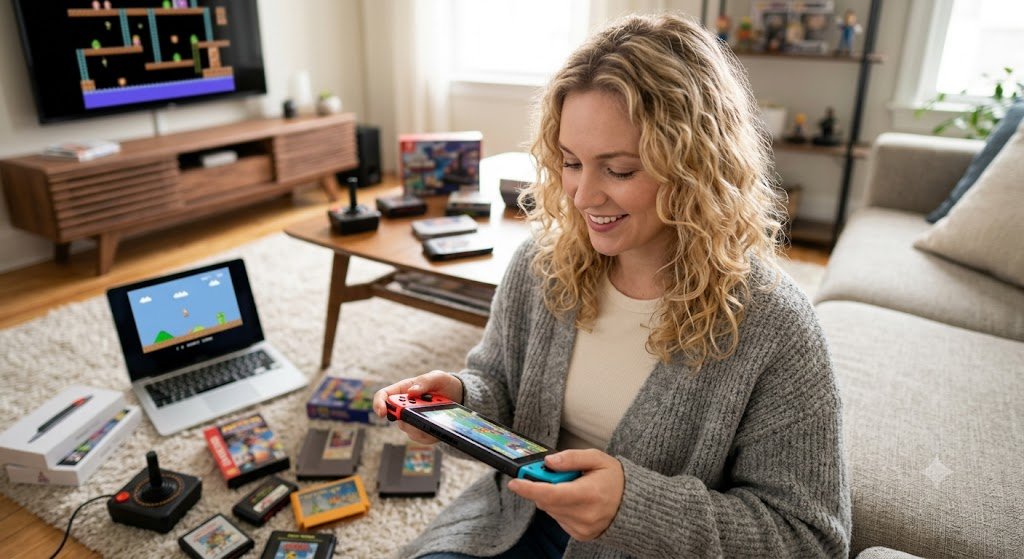
Here’s a question worth sitting with: why does a chunky plastic Atari Flashback, loaded with blocky versions of Pitfall! and Asteroids, still spark joy in a living room full of 4K-capable hardware? The answer says a lot about where home play is heading. People are not abandoning the new in favor of the old. Instead, they keep widening the circle of what counts as a cozy night in front of a screen, pulling everything from cartridge classics to slick browser-based entertainment into the same comfortable couch session. The hunger for variety, for that easy reach-for-the-controller feeling, has quietly reshaped how a whole generation unwinds at home.
That same impulse explains why so many fans of digital entertainment eventually wander toward online casinos real money guides built for US players in 2026. These rankings exist because home players want a clear, vetted starting point: which spots offer the most generous welcome bonuses, how quickly winnings actually reach a bank account or wallet, how deep the slots and live dealer libraries run, and whether the operator is safe and properly licensed. The better guides also break down the different flavors of the experience, comparing sweepstakes sites, offshore options, Bitcoin-friendly spots, and no-KYC choices side by side. For someone who already treats the couch as command central for every kind of game, having a trustworthy map of that territory simply makes sense.
The Flashback Effect Never Really Faded
The Atari Flashback line tapped into something durable. Plug it in, and there’s no patching, no downloads, no twenty-minute update before the fun starts. Just Centipede and Yars’ Revenge the way memory insists they always looked. The Evercade family of cartridge-based handhelds and home units rode the same wave, bundling officially licensed collections of Atari, Namco, Atari Lynx, and Interplay titles into something a collector can hold and shelve.
What makes this more than simple sentimentality is how the brain treats it. Studies on retro gaming nostalgia suggest that revisiting old games triggers a warm sense of continuity and identity — a feeling that the player is still, in some small way, the kid who once mastered Frogger. That emotional payoff is real, and it travels. The same person who treasures a working Flashback is rarely a purist who refuses anything modern. They are, more often, an omnivore who collects experiences across decades.
How “Home Play” Quietly Got Bigger
A decade or two ago, home gaming meant a console under the TV and maybe a PC in the den. Now the definition has stretched in every direction. A single evening might include a few rounds of Balatro on a Steam Deck, a couch co-op session of an indie roguelike, a quick mobile match while the dishwasher runs, and a streamed retro title pulled straight from the cloud. The hardware fences that once separated these worlds have mostly come down.
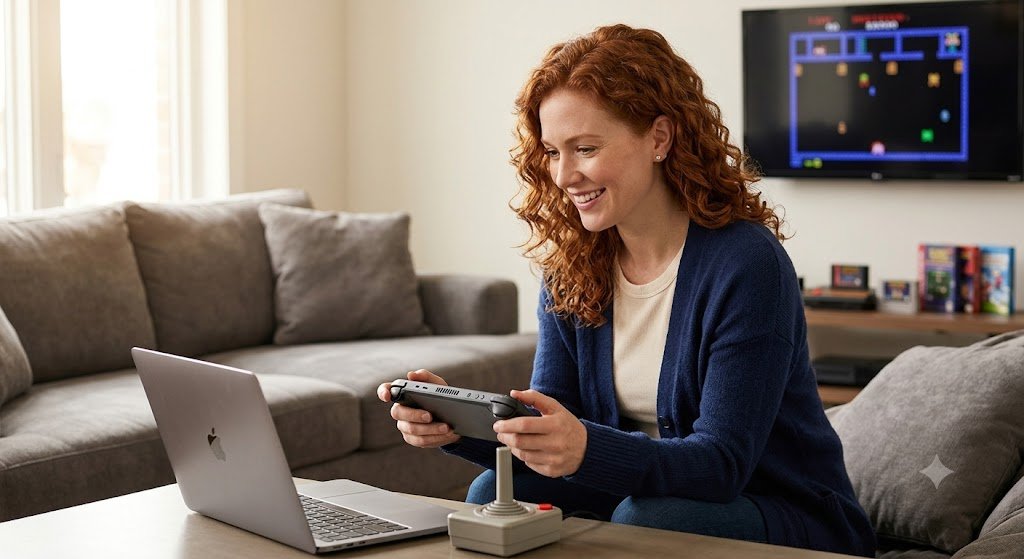
Mini PCs and handheld emulation boxes deserve real credit here. A pocket-sized machine running Batocera can host thousands of classics, while the same device handles a browser tab full of modern web games without breaking a sweat. Once the screen becomes a single, flexible window into all kinds of play, the line between “a video game” and “a digital game” blurs. Card games, puzzle apps, slot-style entertainment, and arcade shooters all start to feel like neighbors on the same block rather than strangers from different eras.
Why Variety Is the Real Draw
The common thread is not graphics or genre — it’s the texture of the experience. Some nights call for a long, story-driven adventure. Other nights, a player wants the opposite: short loops, instant feedback, a little flutter of chance. That craving for quick, low-commitment fun is exactly why casual and luck-based games have always thrived, from the coin-pusher in the back of the arcade to the daily spin in a mobile title.
Research into teens and video games today shows just how mainstream and social this casual layer has become, with a huge share of young people gaming partly to relax and partly to connect with friends. That blend of unwinding and socializing scales up nicely to adults, too. The person who spent high school trading Pokémon cards may now bounce between a deck-builder, a fishing-arcade shooter, and a live dealer table — all from the same chair, all chasing that same easy hit of entertainment.
Nostalgia, Comfort, and the Couch
There’s a reason so much of this circles back to comfort. Returning to familiar mechanics — spinning reels, matching symbols, drawing a hand — carries a soothing predictability. Writing on how nostalgic games strengthen family bonds points to the way shared, familiar play creates connection and a sense of belonging across generations.
That comfort principle helps explain the modern home setup. A grandparent who once fed quarters into Galaga and a grandkid raised on touchscreens can both find something to enjoy in the same evening. The retro handheld gets passed around. The big screen cycles through whatever someone feels like booting up. The appeal isn’t novelty for its own sake; it’s the reliable warmth of pressing play and knowing fun is a few seconds away.
Where the Trend Is Heading
The direction is clear enough. As streaming, emulation, and browser-based entertainment keep collapsing the distance between formats, “home gaming” will keep absorbing more of the digital leisure landscape. The Flashback on the shelf and the slick web game in the next tab are no longer rivals — they’re chapters of the same hobby.
What ties it all together is the player’s curiosity. Someone who happily jumps from a 1982 cartridge to a 2026 indie hit has already proven they value range over loyalty to any single era. That mindset is the engine behind the whole shift, and it shows no sign of slowing down.



 Your total news and information resource for all things Science, Technology, Engineering / Mathematics, Art, and Medicine / Health.
Leave a Comment