

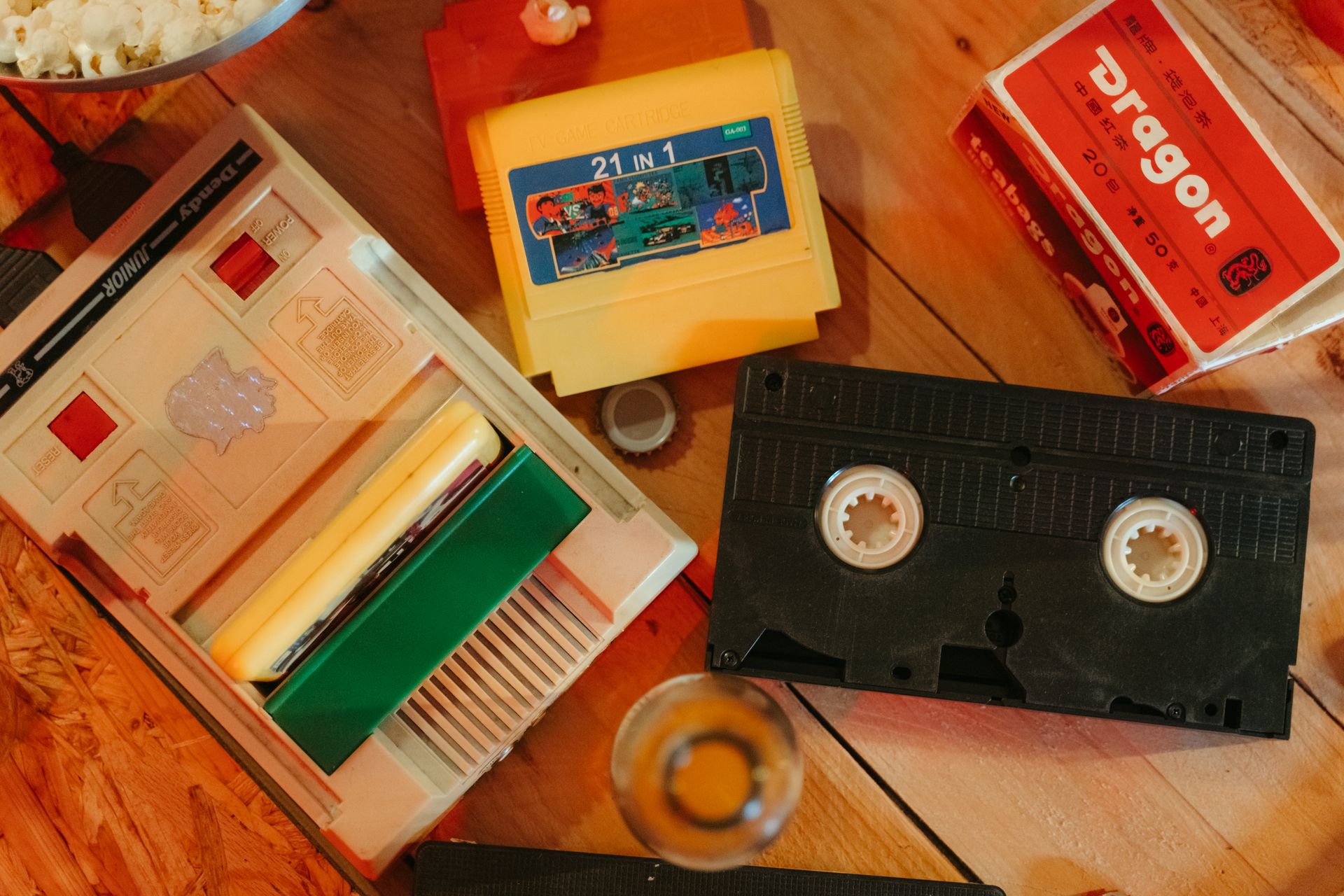
That dusty box of SNES cartridges in your closet?
It could be worth a lot more than you think.
Retro gaming has been huge the past few years and collectors are spending serious cash on mint working copies. The issue is that most of these vintage games are rotting away inside their plastic shells. Heat, moisture and sunlight are slowly killing:
- Circuit boards
- Disc reflective layers
- Plastic shells
- Save batteries
- Original labels
If you don’t store them properly… you’ll lose them forever.
The good news? Preserving a retro game collection is easier than you think.
What you’ll discover:
- Why Retro Game Preservation Matters Right Now
- The Biggest Threats To Your Collection
- How To Store Cartridges Properly
- How To Store Discs & Consoles
- Long-Term Storage For Serious Collectors
Why Retro Game Preservation Matters Right Now
The retro gaming boom is real and it’s bigger than ever.
The retro gaming industry earned $3.8 billion in revenue in 2025 and is expected to generate $8.5 billion by 2033. That’s annual growth of 10%. Approximately 14% of gamers in the US play games released prior to 2000 on a regular basis. Copies of popular titles in sealed packages sell for hundreds. Rare releases go for thousands.
Translation? Your old games are an actual investment now.
But here’s the catch…
Collectible storage isn’t normally something gamers concern themselves with. Plastic tubs full of loose cartridges get tossed in garages, attics and basements. But those are exactly the worst places to keep collectible media long-term. If you want to maintain any real value be sure to check out storage units that aren’t humid. They keep temperature and humidity consistent throughout the year. That’s important if you live somewhere that experiences sweltering summers or humid seasons that damage plastic, paper, and circuit boards.
OK now let’s talk about what actually destroys these things.
The Biggest Threats To Your Collection
Old games don’t just “go bad” on their own.
Every piece of damage you’ll ever see comes from one of these four enemies:
- Humidity — corrodes metal contacts and grows mould on labels
- Heat — warps plastic and breaks down disc layers
- Light — fades labels and weakens polymers
- Time — batteries die and chemicals slowly break down
Let’s break each one down…
Humidity
Moisture is the number one cause of death for retro games. Humidity tarnishes the gold pins on cartridges so they won’t connect cleanly to your system. For discs, it gets between the layers and causes corrosion of the reflective layer.
This is called disc rot and it’s permanent.
If your disc begins to rot you will never clean it back to life. You want humidity to be between 30% and 50%.
Heat
Heat is the second stealthy killer. Plastic bends, glue loses its grip and disc layers peel apart. Attics, garages and cars are all torturer’s chambers for retro games. Store your collection in an area that stays regularly between 60° F and 70° F (15-21° C). Stay away from areas near radiators, windows or outside walls.
Light
Sunlight kills labels faster than anything else. A Mario cart that has faded labels is worth half of one with crisp labels. UV rays will also damage the plastic shell and make it brittle overtime. Store your games away from light.
Time
Save batteries housed within cartridges typically last around 15-25 years. The majority of NES and SNES games with saves built-in are already well beyond this lifespan. Furthermore, plastic slowly degrades naturally over time. While you can’t stop time from passing, you can drastically slow it by minimizing the other three factors.
How To Store Cartridges Properly
Cartridges are tough but not indestructible.
Here’s exactly how to store them:
- Stand them vertically (never stack flat)
- Keep them in acid-free boxes or archival sleeves
- Add silica gel packets to absorb moisture
- Avoid standard plastic bins (they off-gas)
- Keep labels facing away from light
If you have collectible cartridges, bring out those nice original cardboard boxes from long-term storage and break out the good protectors. Cardboard holds moisture and attracts silverfish and other critters that feast on game manuals.
In save battery games replace the CR20xx battery every 15 years or so. Install it in a battery holder so you can easily replace it again.
Pretty straightforward, right?
How To Store Discs & Consoles
Discs are more fragile than cartridges.
The data layer of CDs and DVDs are very thin. Once it starts deteriorating, the data you have is lost forever. Ways to preserve your discs:
- Store them vertically in original cases
- Keep them out of direct sunlight
- Never stack discs loose on top of each other
- Hold them by the edges only
- Clean from centre to edge with a soft cloth (never circular)
With consoles, it’s slightly different threats. Capacitors dry out and plastic yellows and rubber feet degrade into squishy gum.
Here’s what to do:
- Remove batteries from controllers before storing
- Wrap consoles in soft cotton (not plastic bags that trap moisture)
- Store consoles upright in their original boxes if possible
- Keep cables coiled loosely (tight coils crack the insulation)
Long-Term Storage For Serious Collectors
If you have a serious collection… You’ll want a real storage setup.
If you are someone with higher value games, get your best titles graded/sealed. Of anything sealed, graded games will hold value the best. Sealed NES Classic consoles now sell for approximately $122.50 — 104% premium from its retail launch price of $59.99.
For the rest of your collection:
- Use a dedicated room or closet on the main floor of your home
- Keep a digital hygrometer to monitor humidity
- Check your collection every 6 months
- Rotate silica gel packs every 3 months
- Keep an inventory list (with photos)
If keeping it at home isn’t an option, the next best place to store your collection is in a climate controlled storage unit. Make sure it is climate controlled and not just air conditioned, there is a difference between the two.

Bringing It All Together
Preserving a retro game collection isn’t complicated. It just takes consistency.
The three things you must control are:
- Humidity — keep it between 30-50%
- Temperature — keep it between 60-70°F
- Light — keep it dark
Get those three right and your games will outlast you.
The market for retro games will only continue to expand. There are more collectors with disposable income than ever. The average US gamer is 36. The games you dusted off from your childhood are now legit collectibles. Start acting like it.
Don’t let your collection rot away in the garage. Store it somewhere safe, keep it stored properly and visit it every few months. You’ll thank yourself in the future.




 Your total news and information resource for all things Science, Technology, Engineering / Mathematics, Art, and Medicine / Health.
Leave a Comment